
Guide / the medical supply chain
Medical inventory management: the supplier side, honestly
Clinics and pharmacies need clinical systems. The businesses that supply them — consumables, devices, equipment — need product operations with sharpened traceability. That is where BSimple plays.
The straight answer
- Clinical inventory — patient-linked, regulator-audited — needs specialist systems BSimple does not provide and will not pretend to provide.
- The medical supply chain around it is product distribution: consumables, devices and equipment moving from suppliers to clinics.
- That distribution sharpens one requirement: provenance — lots, expiry dates, and traceability search in both directions.
- BSimple runs the supplier side — batch tracking, expiry dates, recall-ready search — from $180/month (AUD) with a free trial.
- Context: the full inventory system holds the wider system, this page one stop in it.
- 01The straight answer
- 02Why the medical chain sharpens traceability
- 03Where BSimple fits
Why the medical chain sharpens traceability
Every industry says its stock matters; the medical chain has a recall notice to prove it. When a manufacturer flags a lot, the distributor needs answers in minutes, not weeks: which lots are on the shelf, which customers received them, and what is still in the pipeline. That requires the record to have been capturing provenance all along — lot numbers on receipts, expiry dates on batches, movements attributed and document-linked — because traceability cannot be reconstructed after the fact.
Expiry discipline rides on the same record: which lots are active, which expire first, and what needs moving or writing off. None of this is clinical decision-making — it is distribution hygiene with higher stakes, and it is precisely what batch and lot tracking exists to do. The medical boundary page and the hospital guide draw the clinical line in detail.
Where BSimple fits
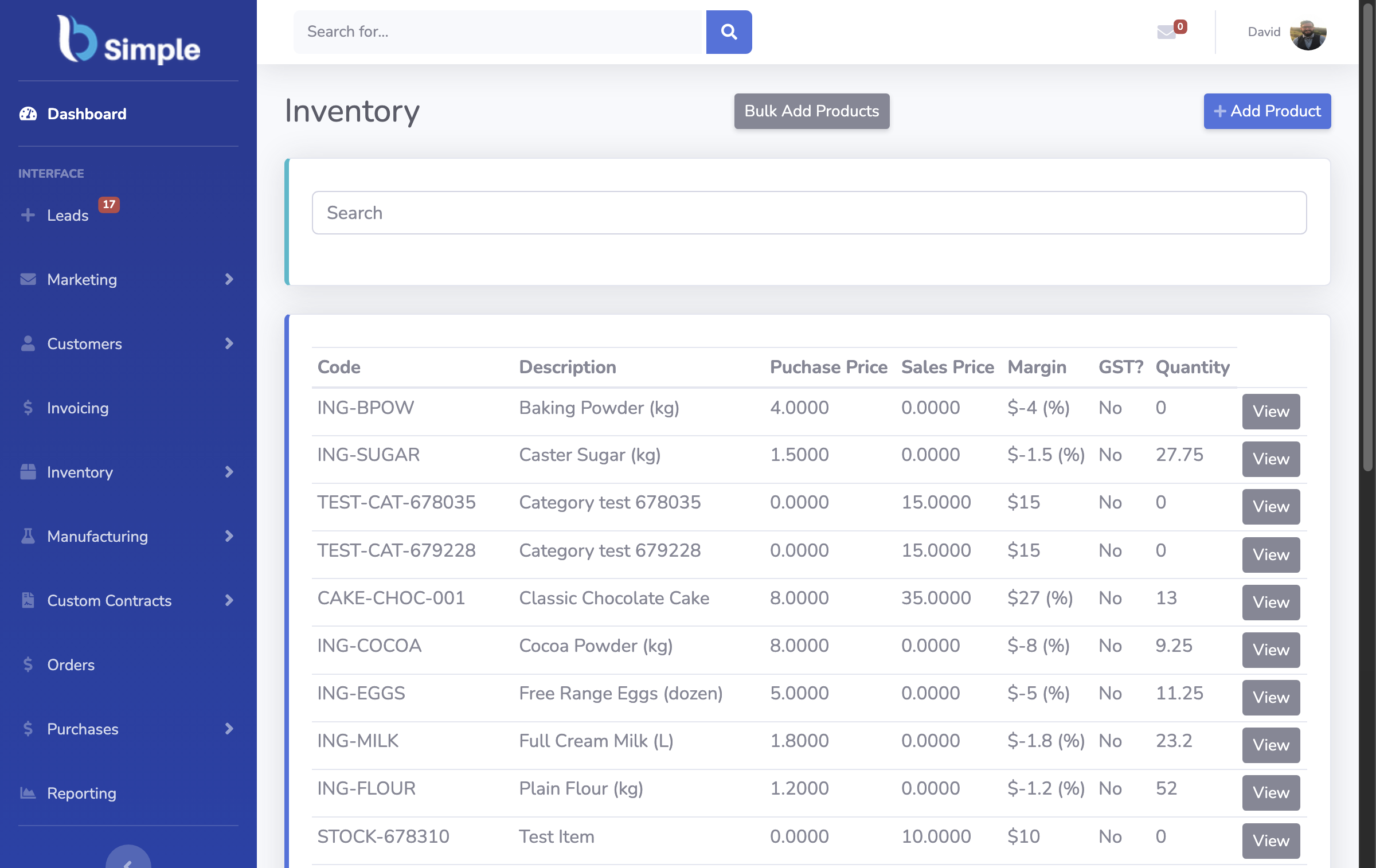
We build BSimple, so weigh that. For suppliers and distributors serving the medical sector it runs the full loop on one record: live multi-location stock, batch and lot tracking with expiry dates, traceability search in both directions — supplier lot to customer, customer complaint back to lot — purchase orders from demand with supplier variance flags, a customer ordering portal giving clinics and practices their own pricing through a unique link, stocktakes from any phone browser, and invoicing handed to Xero or MYOB. Plans start at $180/month (AUD), and the free trial runs one real lot through the whole chain.
The boundary, restated for safety: BSimple does not link stock to patients, does not handle prescriptions, does not produce regulatory filings, and does not enforce FEFO — the record surfaces which lots expire first, and the operational discipline uses it. Clinical accountability belongs to clinical systems. Batch tracking software details the traceability layer.
Frequently Asked Questions
Is BSimple suitable for clinics or pharmacies?
No — clinical inventory requires patient-linked, regulator-audited workflows BSimple does not have. Pharmacies and clinics should use specialist clinical systems; this page serves the businesses that supply them.
Can BSimple trace a recalled lot?
Yes — traceability search runs both directions: from a supplier lot forward to every customer who received it, and from a customer complaint back to the lot and its receipt. That readiness is built from the same record as everything else, not bolted on.
Does BSimple enforce FEFO?
The record shows which lots expire first so your picking discipline can act on it; BSimple does not enforce picking order. That distinction matters — the record is the system's job, and the shelf habit is yours. Pages claiming automated FEFO enforcement should be asked to demonstrate it.
We also supply non-medical lines. One record or two?
One — medical and general lines are products on the same record, with batch tracking where it matters. Splitting the record by industry recreates the sync problem; tagging and segmentation handle the reporting split without splitting the truth.
BSimple