
Guide / the fleet as locations
Vending machine inventory, run on one record
Fifty machines are fifty small warehouses with nobody at the door. Here is the honest pattern — machines as locations, restocks as picks, visits as counts — without pretending to telemetry.
The short answer
- Each machine is a location: its planogram is a product list, its quantities live, its shortfalls visible.
- Restock runs are picks: the run loads what the record says is missing; the visit count reconciles what the machine actually held.
- Variances replace folklore: sell-outs, jams and shrinkage surface as data at the visit, not as stories between them.
- The honest gap: no machine telemetry — sales are reconciled at visits, not streamed. Route planning is not included.
- BSimple runs this pattern from $180/month (AUD), free to trial on one real machine.
- 01The short answer
- 02The pattern, on the record
- 03Where BSimple fits
The pattern, on the record
Vending inventory has three moving parts and one blind spot. The parts: machines as locations — each carrying its planogram and its live quantities; restock runs as picks — the record shows what each machine is short, the van loads it, the visit confirms it; purchasing from demand — fleet-wide dips trigger purchase orders, not per-machine guesses. Where machines sit on customer premises, the projects feature keeps each machine as an asset under that customer, with service and maintenance history per visit.
The blind spot is honesty's job: without connected telemetry, what sold is learned when the machine is opened. The count at the visit reconciles the record — sell-outs, jams and shrinkage become visible variances with dates and locations, which is still a transformation from the clipboard era, and still not streaming. A page promising live per-machine sales data without telemetry would be selling the blind spot back to you. Route-based industries with the same rhythm — bakery inventory software is one — solve it the same way: the record moves with the goods.
Where BSimple fits
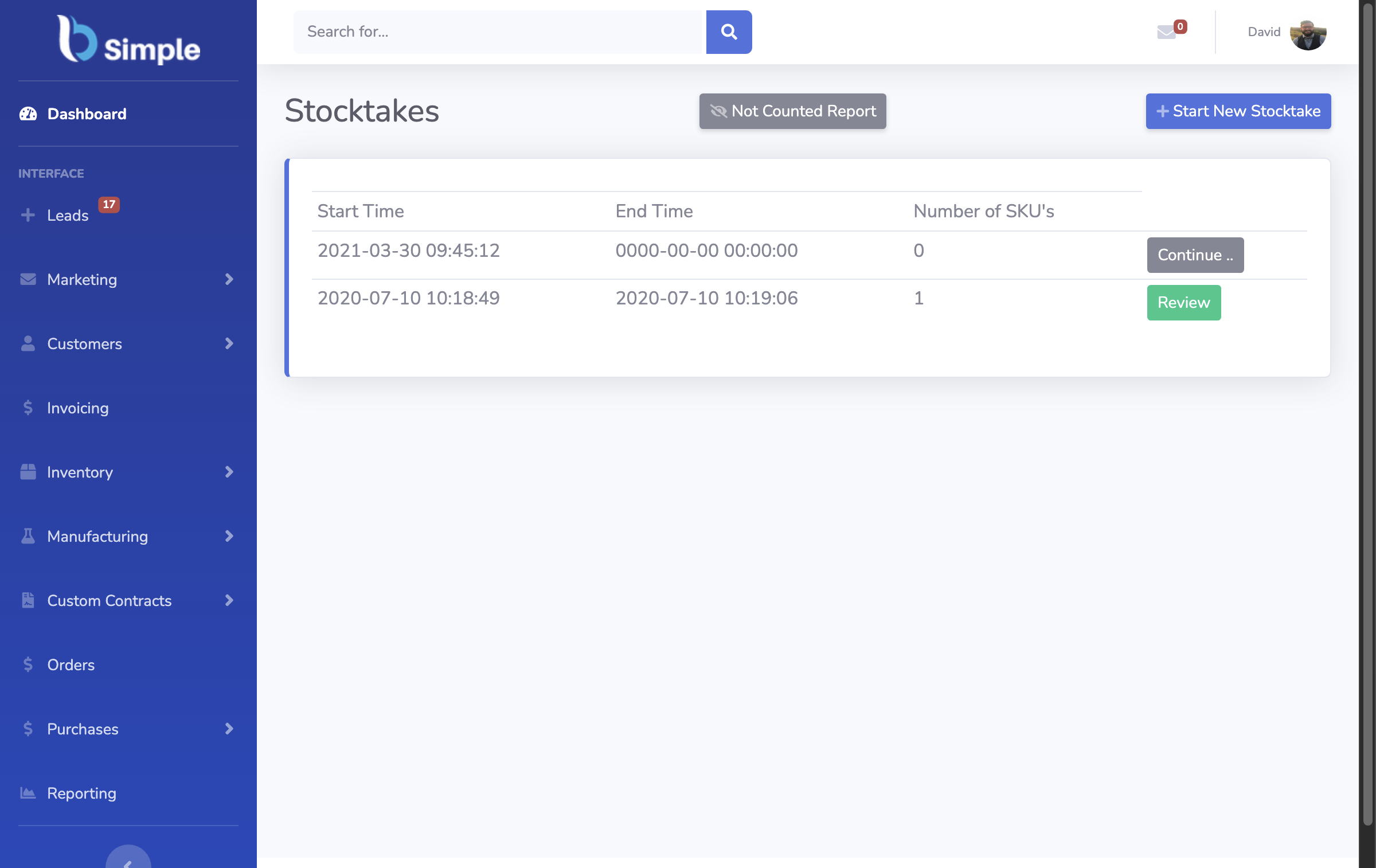
We build BSimple, so weigh that. For vending operators it runs the location-pick-count pattern on one record: multi-location live stock across the fleet, restock runs as picks from any phone browser, counts that reconcile at the service visit, purchase orders from demand across the whole catalogue, and the accounting handoff to Xero or MYOB. Plans start at $180/month (AUD), and the free trial tracks one real machine through a full restock cycle.
The boundary, plainly: BSimple is not a vending platform — no route optimisation, no cash reconciliation, no machine telemetry integrations. If those are the core need, a vending-specialist system leads; BSimple can be the stock record underneath it. The vending pattern page covers the workflow in depth, and the inventory management overview shows the record the machines live in.
Frequently Asked Questions
Can BSimple track stock per machine?
Yes — each machine is a location with its own product list and quantities. Restock runs pick against it, visits count against it, and the record shows what every machine held at every visit, without a clipboard in sight.
Does BSimple show live sales per machine?
No — without telemetry there is no streaming sales data; what sold is reconciled at the visit when the machine is counted. If live per-machine sales are essential, a telemetry platform is the honest first tool, with BSimple as the stock record behind it if wanted.
How do restock runs stay accurate?
The record shows each machine's shortfall, the run loads against it, and the visit count reconciles what actually landed. Variances — a jammed slot, a discrepancy — surface with a date and a location, which is what makes them fixable instead of folkloric.
We also wholesale product to other operators. Does that fit?
Yes — the same record handles the supply side: trade customers order through their own portal at their own pricing, and those orders allocate from the same stock the machines draw on. One record, every direction the product moves.

BSimple