
Guide / coffee roasting
Inventory management for coffee roasters
Roasting is inventory-intensive: every green shipment is a lot, every roast a batch, every blend a recipe — and wholesale cafes expect their own pricing and their own ordering path. Here is how that record works.
The key facts
- Green beans as lots: every shipment tracked by supplier lot, origin, quantity and cost — separable from last month's arrival of the same origin.
- Blends as recipes: origin percentages define the blend; a production run consumes each green lot and creates a traced roasted batch.
- Traceability both ways: from a bag sold to a cafe back to the roast batch, and back to the green lots that went into it.
- Organic mass balance supported — ACO, NASAA and OFC certification are cited by existing BSimple customers.
- Wholesale ordering through the portal, invoices pushed to Xero or MYOB — on the same record as the stock.
- Where it fits: this page is one branch of the inventory management guide.
- 01The key facts
- 02Green bean inventory, by lot
- 03Blends, roast batches and traceability
- 04Wholesale cafes and the accounting handoff
Green bean inventory, by lot
Coffee breaks generic inventory software for a simple reason: the same origin in different months is not the same product. Different harvest, different moisture, different price — and for certified operations, different certification status. A record that treats "Ethiopia" as one line cannot answer which shipment a roast came from, which is the question every traceability and quality conversation eventually asks.
Lot-based tracking fixes this at the receipt: each supplier shipment arrives as its own lot — origin, supplier reference, quantity, cost — against a purchase order, with goods received updating the record. As green beans are pulled for roasting, consumption comes from specific lots, so what is in stock, what is allocated to upcoming runs, and what has been used stays visible without a separate spreadsheet.
Blends, roast batches and traceability
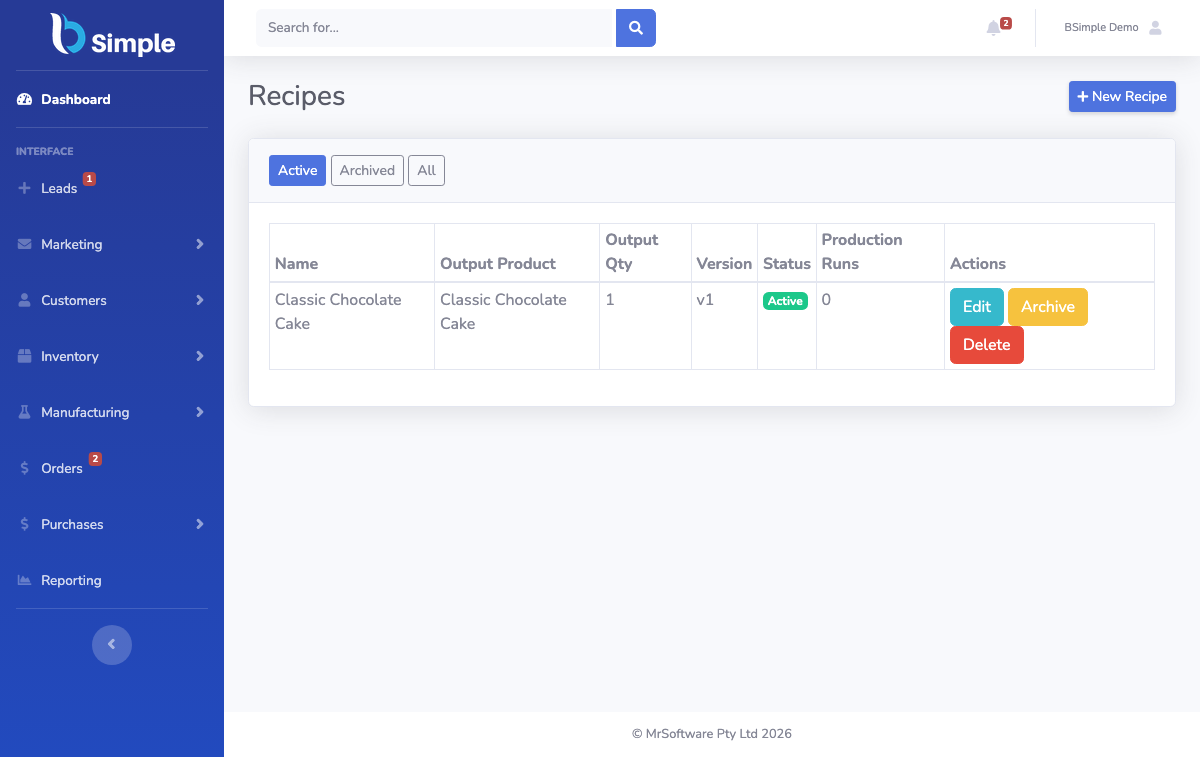
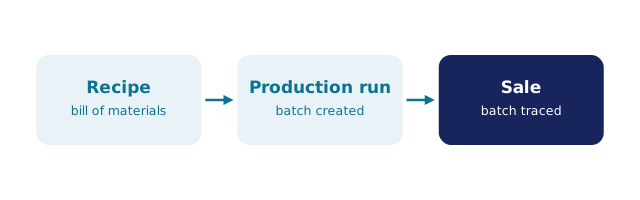
A house blend is a recipe: percentages of each origin, versioned as the recipe evolves. Running the blend as a production run consumes the green lots it specifies, runs shortage checks against live quantities before you start, and produces a roasted batch — a single unit of traceability that inherits what went into it.
From there the chain reads in both directions. A cafe with a quality question on a bag: bag → roast batch → green lots → supplier shipment. A suspect green lot: lot → every batch it entered → every customer those batches shipped to. For organic-certified roasters, mass-balance reporting draws on the same chain — the certified share of each batch follows from the lots consumed, which is the reporting ACO, NASAA and OFC audits ask for. How batch tracking works covers the mechanics.
Wholesale cafes and the accounting handoff
Cafe accounts order through the customer portal — each customer gets their own link, their own product list and their own negotiated pricing, so the order arrives without email chase or pricing confusion. The order moves through pick and pack against the roasted-batch stock, approval commits the quantities, and the invoice pushes to Xero or MYOB with payment status mirroring back. Because the batch shipped is recorded against the order, the traceability chain survives the sale.
We build BSimple, so weigh that: the green-to-roasted-to-wholesale loop above is the product — recipes, production runs, traced batches, mass balance, portal and invoicing on one record, with plans from $180/month (AUD). The manufacturing inventory guide places roasting among production workflows, the production comparison evaluates the category, and the ordering-and-inventory overview covers the wholesale loop. The trial is the honest test: run one lot through to a traced batch sale on your own beans.
Frequently Asked Questions
Can BSimple track green coffee by lot and origin?
Yes — each supplier shipment is received as its own lot with origin, supplier reference, quantity and cost, and consumption for roasting comes from specific lots. Same-origin shipments from different months stay distinct, which is what traceability and certification reporting depend on.
Does BSimple handle blend recipes?
Yes — a blend is a recipe of origin percentages, versioned as it changes. A production run consumes the specified green lots, checks for shortages before starting, and logs the roasted batch against the recipe and lots used.
Does it do organic certification and mass-balance reporting?
Mass-balance and traceability reporting are built in, and ACO, NASAA and OFC certification are cited by existing BSimple customers. The certified share of a batch follows from the certified lots it consumed — the chain, not a separate spreadsheet.
Can cafes order online, and does it connect to Xero?
Yes — each cafe orders through its own portal link with its own pricing, orders flow into pick and pack, and approved invoices push to Xero or MYOB with payment status mirroring back. The shipped batch is recorded against the order, so traceability continues past dispatch.
BSimple